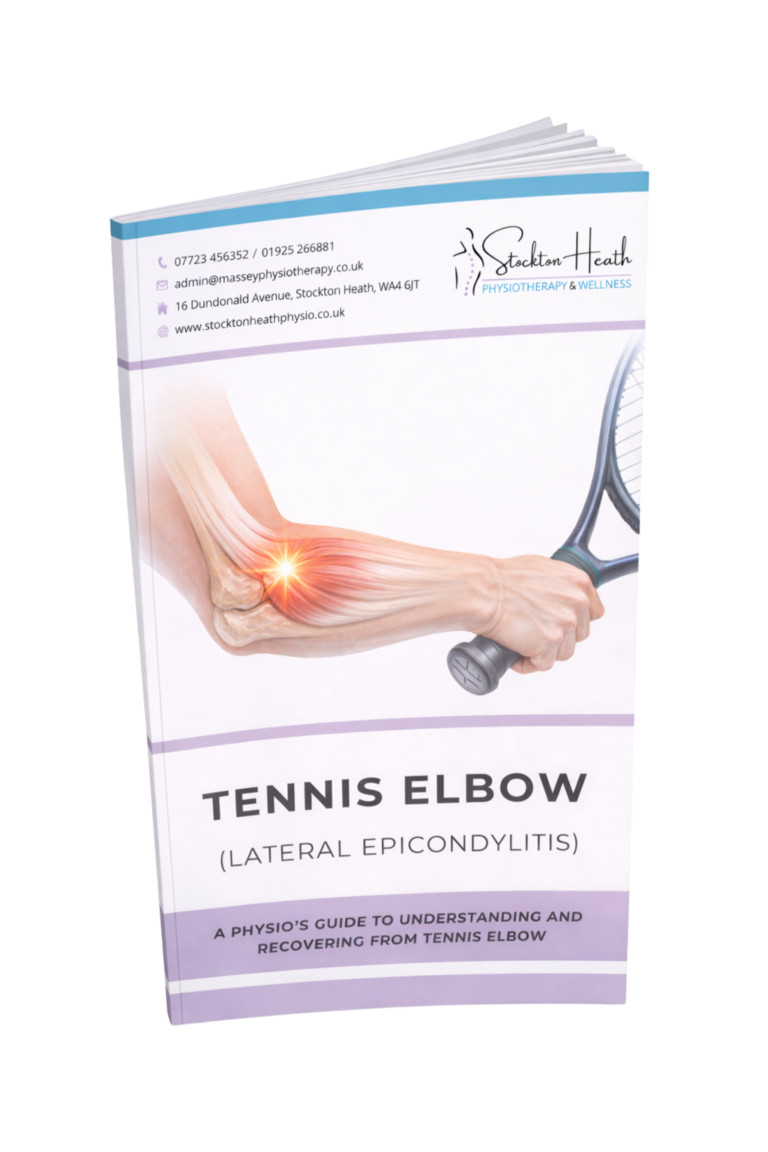
Tennis elbow treatment in Warrington — including shockwave therapy
If you're finding it difficult to:
- Grip, lift and carry without outer elbow pain
- Use a keyboard or mouse through a working day without the elbow building
- Get back to sport, hobbies or work without elbow pain limiting everything
The good news
Does this sound like you?
Pain on the outer side of the elbow
Pain when gripping, lifting or carrying objects
Weak and painful grip
Pain when shaking hands, opening jars or turning door handles
Tenderness when pressing on the outer bony prominence of the elbow
Pain that has developed gradually over weeks of repetitive use
Why does tennis elbow become a long-term problem?
Who gets tennis elbow?
- Manual workers and tradespeople
- Office workers using keyboards or mice extensively
- Adults aged 35–55
- People performing repetitive gripping tasks
- Racquet sport players
Common causes
- Repetitive gripping, lifting or carrying overloading the forearm tendons
- Sudden increase in activity or change in work tasks
- Poor tool technique or ergonomics
- Weak shoulder or forearm muscles placing excess demand on the elbow
- Previous elbow injuries
Simple steps that may help
01
Temporarily reduce activities that provoke the elbow
02
Avoid heavy gripping or lifting
03
Apply ice after activity if the elbow is warm
04
Begin gentle forearm strengthening — wrist extension exercises
When should you get help?
- Elbow pain lasting more than 2–3 weeks
- Grip strength decreasing
- Pain interfering with work or daily tasks
- Symptoms worsening rather than improving
Red flag symptoms
- Severe elbow pain after a fall or impact
- Significant swelling in the elbow
- Sudden inability to move the arm
- Persistent numbness in the hand
How we treat tennis elbow at SHPW
At our clinic in Stockton Heath, Warrington, we use evidence-based treatments tailored to your specific condition
Shockwave therapy
Strong clinical evidence for stubborn tennis elbow, often effective where rest has failed
EMTT
For deep tendon repair in persistent or long-standing cases
Progressive loading programme
The evidence-based foundation of tendon recovery
Load management advice
Identifying and modifying the activities driving the overload
Acupuncture
For pain management alongside the rehabilitation programme
Start fixing your tennis elbow today