
Struggling with heel pain in Warrington?
Plantar fasciitis treatment in Warrington — including shockwave therapy
If you're finding it difficult to:
- Take your first steps in the morning without sharp heel pain stopping you
- Walk and stand for longer without the heel building up
- Get back to running, sport or work without heel pain holding you back
You’re not alone — and you don’t have to just put up with it. Plantar fasciitis is one of the most common causes of heel pain. It occurs when the plantar fascia — a strong band of tissue running from the heel bone to the toes along the sole of the foot — becomes overloaded and irritated, causing pain and stiffness in the heel.
Good News
The good news
Most cases of plantar fasciitis improve significantly with the right physiotherapy and rehabilitation. Shockwave therapy is available at our clinic and has an excellent evidence base for heel pain — producing significant improvement in many cases that haven’t responded to rest, stretching or orthotics alone.
Symptoms
Does this sound like you?
Sharp pain under the heel — worst with the first steps in the morning
Pain after periods of rest (getting up after sitting down)
Pain when walking or standing for extended periods
Tenderness when pressing directly under the heel bone
Pain that improves slightly with activity but returns after rest
Occasional heel swelling
If any of these sound familiar, a physiotherapy assessment will tell you exactly what’s happening — and what will help.
Why it persists
Why does plantar fasciitis become a long-term problem?
Plantar fasciitis that becomes chronic is almost always because the loading issue driving it hasn’t been identified and addressed. Most patients are told to stretch and rest — which may reduce pain temporarily but doesn’t build the capacity of the fascia to handle load. The fascia needs progressive loading to recover, not just stretching and rest.
Who gets plantar fasciitis?
- Runners and active individuals
- People who stand for long periods at work
- Adults aged 40–60
- People with tight calf muscles
- Those with high or flat arches
- Anyone who has suddenly increased activity levels
Common causes
- Overload from walking, running or prolonged standing
- Tight calf muscles reducing ankle mobility
- Weak foot or hip muscles
- Poor footwear or walking on hard surfaces without support
- Sudden increase in activity levels
- Previous foot injuries
Self-help
Simple steps that may help
01
Reduce activities that aggravate heel pain
02
Avoid walking barefoot on hard floors
03
Wear supportive footwear from the moment you get up
04
Perform gentle calf and foot mobility exercises
If symptoms persist beyond 2–3 weeks, physiotherapy assessment is recommended.
When to seek help
When should you get help?
- Heel pain lasting more than 2–3 weeks
- Morning pain becoming more severe
- Pain limiting walking or work
- Self-care measures not helping
Early treatment = faster recovery. Most patients start to notice improvement within the first few sessions.
Red flags
Red flag symptoms
- Severe heel pain after an injury or fall
- Sudden swelling in the foot
- Inability to bear weight
- Persistent numbness or tingling in the foot
These symptoms require GP review to exclude other causes such as stress fracture.
Treatment
How we treat plantar fasciitis at SHPW
At our clinic in Stockton Heath, Warrington, we use evidence-based treatments tailored to your specific condition
Shockwave therapy
Highly effective for plantar fasciitis, particularly cases lasting more than 6 weeks
Hands-on physiotherapy
Manual therapy, joint mobilisation and soft tissue work
Orthotics
Custom or off-the-shelf support to correct loading patterns
Rehabilitation programme
Graduated loading to build plantar fascia capacity
Foot biomechanics assessment
Identifying and correcting the movement pattern driving the overload
Start fixing your plantar fasciitis today
If your symptoms have lasted more than 2–3 weeks, they’re unlikely to go away on their own. The sooner you start treatment, the faster you recover.
Full appointment
Full Physiotherapy Assessment
A detailed diagnosis and a personalised treatment plan, ready to start straight away.
Free, no obligation
Free 15-Minute Discovery Visit
A quick chat to understand your problem, answer your questions and point you in the right direction. No obligation.
or call 01925 266881 · Monday–Saturday · No GP referral needed
Ready to get this sorted? No GP referral needed.
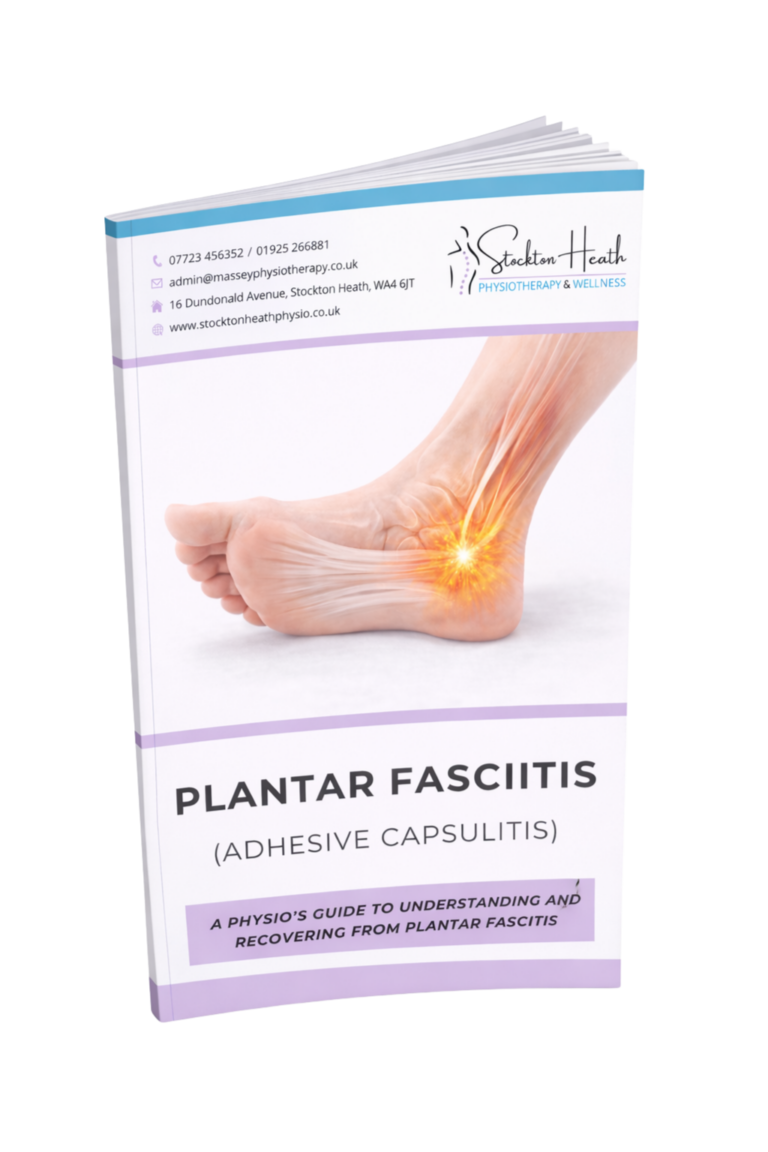
Free Guide
Not ready to book yet?
Want to start understanding and improving at home before you commit to an appointment? Download our free guide
Download your free guide
No spam, ever. Unsubscribe anytime.