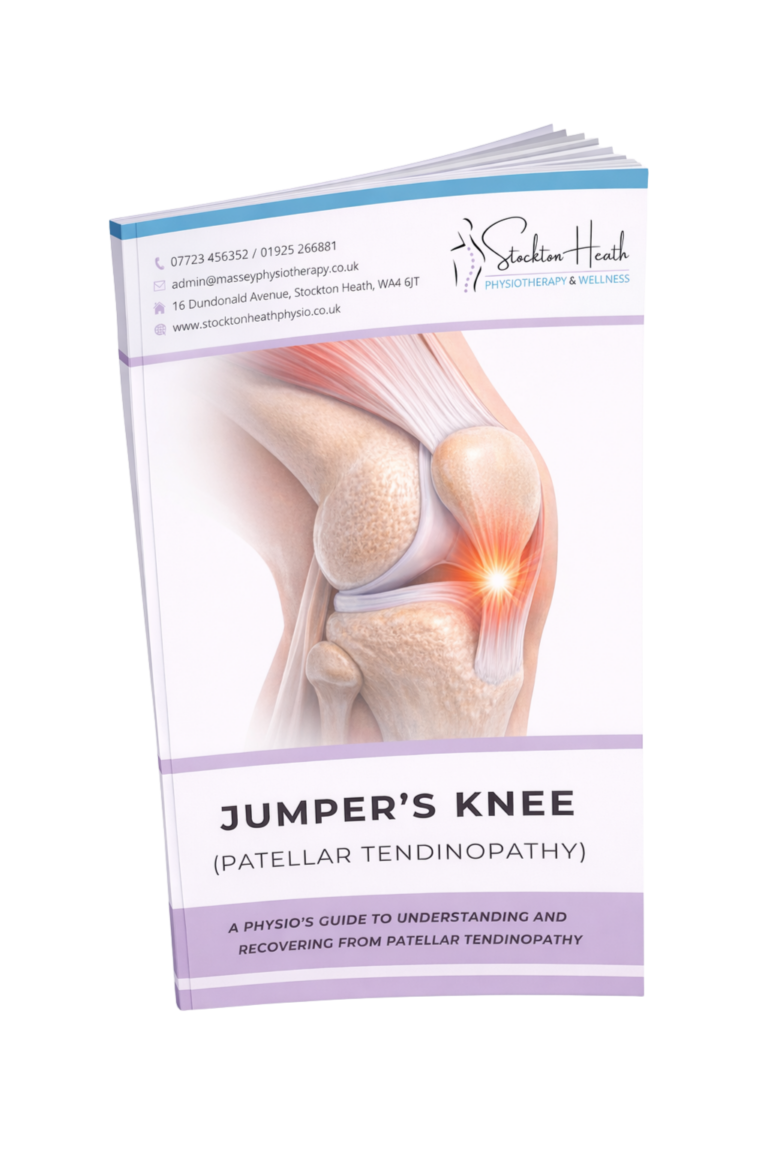
Patellar tendinopathy in Warrington — jumper’s knee treatment that works
If you're finding it difficult to:
- Train and compete without patellar tendon pain limiting you
- Complete a session without the knee stiffening up afterwards
- Get a structured rehabilitation plan that actually works
The good news
Does this sound like you?
Pain at the front of the knee — typically just below the kneecap
Pain during or after running, jumping or squatting
Pain when climbing or descending stairs
Stiffness in the tendon after periods of rest
Morning stiffness that eases after a few minutes of movement
Tenderness when pressing on the patellar tendon attachment
Why does patellar tendinopathy become a long-term problem?
Who gets patellar tendinopathy?
- Athletes in jumping sports (basketball, volleyball, netball)
- Runners
- People performing heavy squatting or lunging
- Those who have rapidly increased training intensity
- Individuals with weak hip or thigh muscles
Common causes
- Sudden increase in training volume or intensity
- Weak quadriceps or gluteal muscles
- Poor landing or jumping mechanics
- Tight quadriceps or calf muscles
- Repetitive jumping or sprinting without adequate recovery
- Previous patellar tendon injury
Simple steps that may help
01
Reduce the activities that provoke the pain
02
Avoid deep squatting or heavy plyometric work
03
Apply ice after activity
04
Begin isometric quad exercises — these reduce pain and begin loading the tendon safely
When should you get help?
- Tendon pain lasting more than 2–3 weeks
- Pain worsening with sport or exercise
- Training becoming impossible
- Pain affecting daily activities
Red flag symptoms
- Severe knee pain after injury
- Significant swelling in the knee
- A sudden popping sensation during activity
- Sudden inability to straighten the knee
How we treat patellar tendinopathy at SHPW
At our clinic in Stockton Heath, Warrington, we use evidence-based treatments tailored to your specific condition
Shockwave therapy
Strong clinical evidence for persistent patellar tendinopathy, often effective where rest has failed
Progressive tendon loading programme
The foundation of recovery, carefully graduated to build capacity
EMTT
For deep tendon repair in stubborn or long-standing cases
Movement and landing technique coaching
Correcting the mechanics overloading the tendon
Load management advice
Structured return-to-sport programme
Start fixing your patellar tendinopathy today