
Struggling with back pain in Warrington?
Mechanical back pain in Warrington — treatment that gets to the cause
If you're finding it difficult to:
- Move freely without stiffness or pain limiting you
- Get through the working day without back pain building
- Stop the cycle of back pain that keeps coming back
You’re not alone — and you don’t have to just put up with it. Mechanical back pain is the most common cause of lower back pain. It refers to pain arising from the joints, muscles, ligaments or discs in the spine — usually related to how you move, load or sustain positions. Unlike nerve-related back pain, it typically stays local to the back and buttock rather than travelling far into the leg.
Good News
The good news
Most cases of mechanical back pain improve significantly with the right physiotherapy — without surgery or long-term medication. Research consistently shows that movement and structured rehabilitation outperform rest. Most of our patients see meaningful improvement within the first few sessions once we identify exactly what’s driving the pain.
Symptoms
Does this sound like you?
Dull, aching pain in the lower back that won’t fully settle
Stiffness first thing in the morning that eases with movement
Sharp pain when bending, lifting or twisting
Pain that builds through the day with sustained sitting or standing
Muscle tightness around the spine and hips
Back pain that keeps coming back after it seems to settle
If any of these sound familiar, a physiotherapy assessment will tell you exactly what’s happening — and what will help.
Why it persists
Why does mechanical back pain become a long-term problem?
Mechanical back pain that keeps recurring almost always means the underlying cause hasn’t been found. The pain settles with rest, but the movement pattern, muscle imbalance or joint stiffness that caused it is still there — waiting to be triggered again. Rest is not a cure. Identifying and addressing the cause is.
Who gets mechanical back pain?
- Adults of all ages
- People who sit for long periods at work
- Those who perform heavy lifting
- People with physically demanding jobs
- Those who have suddenly increased activity levels
Common causes
- Poor movement patterns or posture under load
- Muscle weakness or imbalance around the spine and hips
- Joint stiffness in the spine or pelvis
- Prolonged sitting or sustained postures
- Sudden increase in physical activity
- Previous back injury that wasn’t fully rehabilitated
Self-help
Simple steps that may help
01
Stay active and avoid prolonged bed rest
02
Take regular breaks from sustained sitting
03
Perform gentle back mobility exercises
04
Walk regularly to keep the spine moving
If symptoms persist beyond 2–3 weeks, physiotherapy assessment is recommended.
When to seek help
When should you get help?
- Back pain lasting more than 2–3 weeks
- Pain interfering with work or sleep
- Movement becoming restricted
- Symptoms gradually worsening
Early treatment = faster recovery. Most patients start to notice improvement within the first few sessions.
Red flags
Red flag symptoms
- Severe back pain after a fall or injury
- Pain that wakes you at night and doesn't change with position
- Unexplained weight loss
- Numbness or weakness in the legs
- Loss of bladder or bowel control
These symptoms require GP review or further medical investigation.
Treatment
How we treat mechanical back pain at SHPW
At our clinic in Stockton Heath, Warrington, we use evidence-based treatments tailored to your specific condition
Hands-on physiotherapy
Joint mobilisation, soft tissue work and spinal assessment
Shockwave therapy
For chronic or stubborn back conditions that haven’t responded to standard treatment
EMTT
For deep tissue repair in persistent cases
Rehabilitation programme
Targeted strengthening to address the root cause
Posture and movement coaching
Identifying and correcting the habits driving the problem
Start fixing your mechanical back pain today
If your symptoms have lasted more than 2–3 weeks, they’re unlikely to go away on their own. The sooner you start treatment, the faster you recover.
Full appointment
Full Physiotherapy Assessment
A detailed diagnosis and a personalised treatment plan, ready to start straight away.
Free, no obligation
Free 15-Minute Discovery Visit
A quick chat to understand your problem, answer your questions and point you in the right direction. No obligation.
or call 01925 266881 · Monday–Saturday · No GP referral needed
Ready to get this sorted? No GP referral needed.
Free Guide
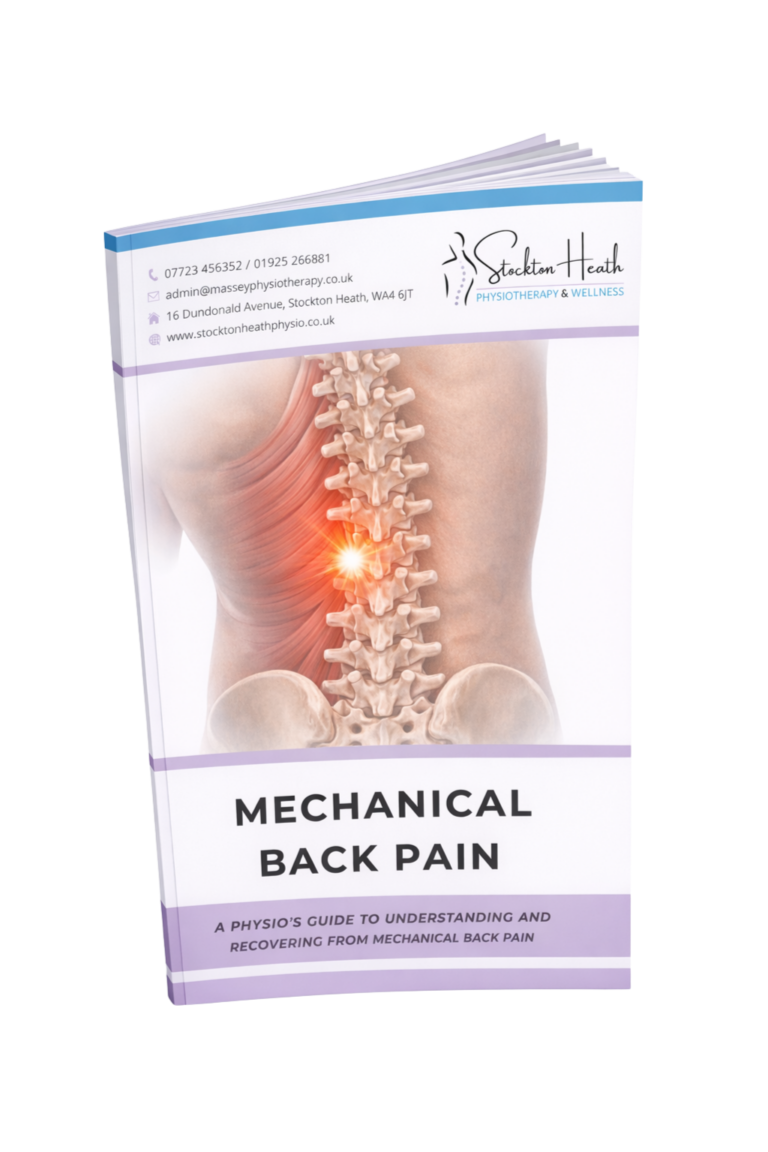
Not ready to book yet?
Want to start understanding and improving at home before you commit to an appointment? Download our free guide
Download your free guide
No spam, ever. Unsubscribe anytime.